Flat Tires and Frozen Toes
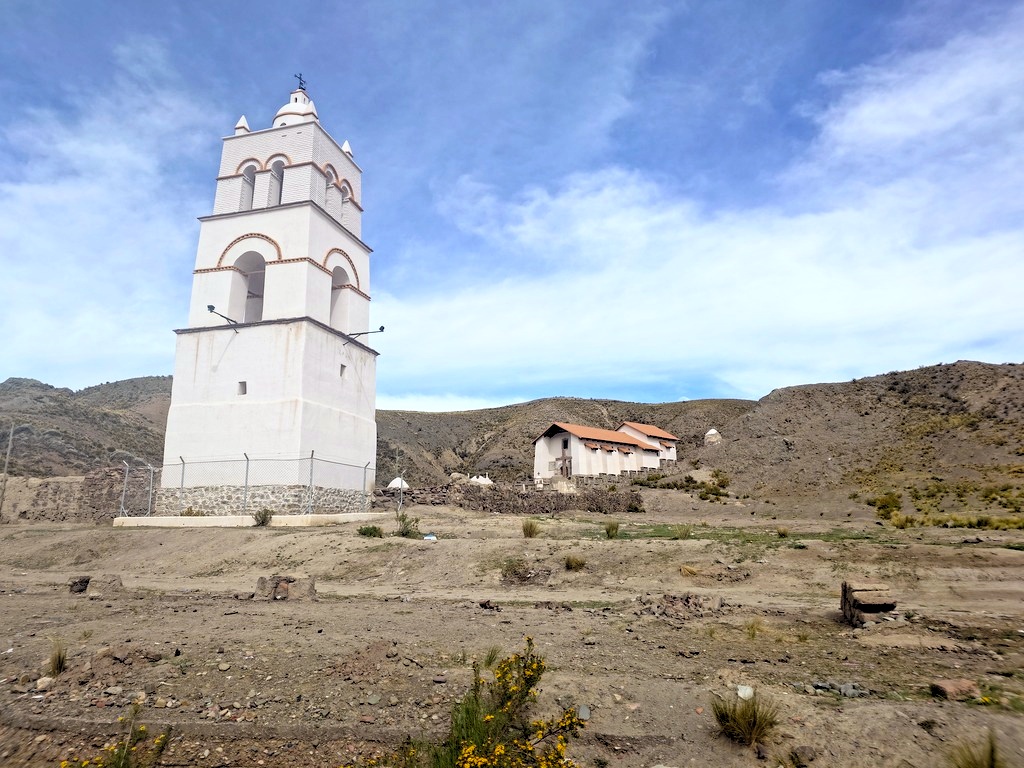
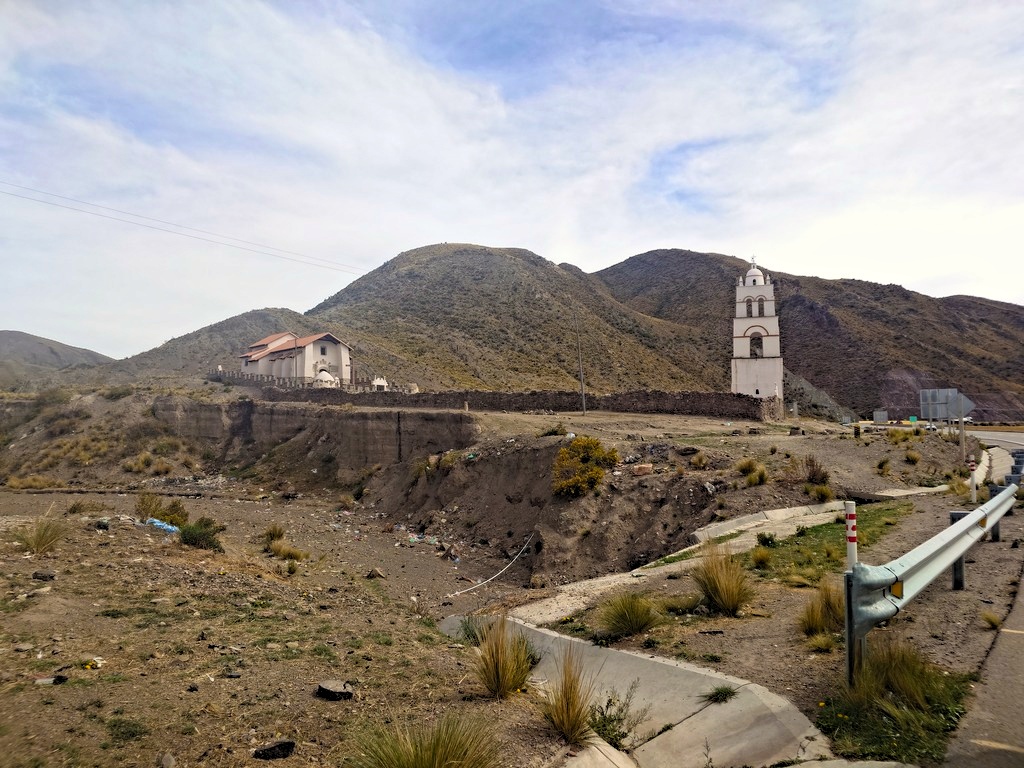
We got up early and went through the usual morning routine: packing up, quick breakfast, and hitting the road before the sun really got going. The plan was to cycle until Catacollo for our second breakfast and to stock up on fruits and vegetables at the market. In theory, that sounded easy enough. In practice, not so much. I don’t know if it’s because of logistical issues from the ongoing diesel shortage or if that’s just how things are on the Bolivian Altiplano, but compared to markets in similar-sized towns on the Peruvian side, this one looked far more run-down and had surprisingly little to offer. Prices were also unexpectedly high. Probably because nothing really grows up here and the diesel shortage means that it’s harder to drive things up. The whole place had that strange combination of scarcity and fatigue.
Jacques and I did groceries at the market while Göran was guarding the bikes, after which I guarded the bikes and Göran looked for a good place to have our second breakfast. While I was guarding the bikes, a large dog suddenly came trotting over and, before I could react properly, decided Göran’s rear tire was the perfect spot to pee on. I tried to shoo him away, but it was too late. A bad omen, as it turned out. When Göran came back after scouting a lunch spot, his tire was completely flat. We later found out that he had ridden over a small metal pin that had punctured the tube. Groceries, second breakfast, and the tire repair ended up costing us almost two hours. Not exactly the efficient morning we had imagined. To make matters worse, the people in Catacollo weren’t exactly friendly. Especially in the shops and at the market, interactions were curt at best and openly rude at worst. You’d think a bit of kindness toward customers might help business, but apparently that’s not the local philosophy. Because everything was also absurdly expensive, we renamed the town “Carocollo” (since caro means “expensive” in Spanish). The name stuck.
Still, there were a few glimpses of local culture that stood out. We saw men dressed in traditional outfits: dark woollen pants, bright red ponchos with colourful stripes, and ceremonial studded white leather whips slung across their chests. Very striking and a small reminder of how layered and alive the Andean cultures still are.
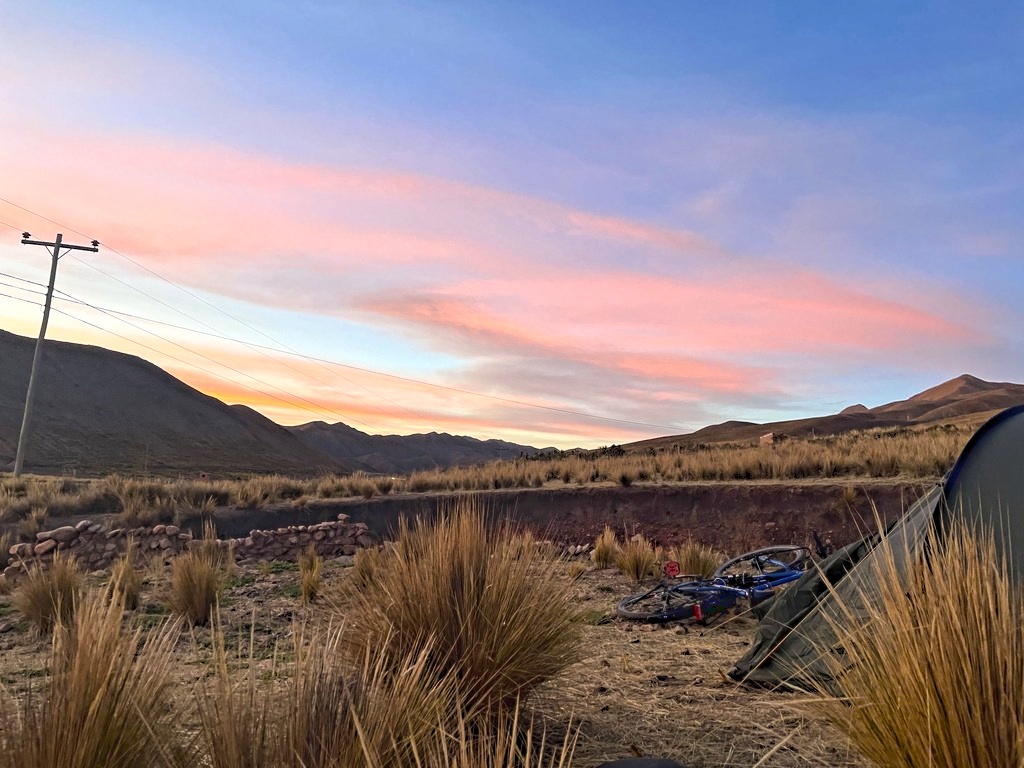
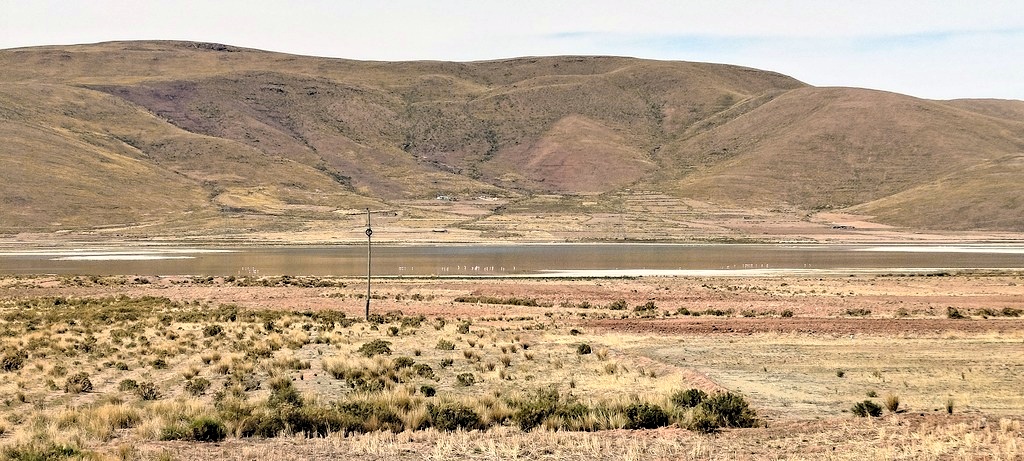
After lunch and the repair work we cycled on. The ride was long and the last kilometres were a grind, climbing steadily while the light disappeared behind the mountains. Just before sunset, we decided to ask an old man if we could camp on a small field near his house. He was nearly deaf but understood enough to nod and point to where we could pitch our tents. He even let us fill our bottles from his tap. He looked like he didn’t have much himself, so we gave him a bit of money as a thank you. He seemed genuinely surprised and incredibly happy. It was the kind of reaction that stays with you as it shows how little the man must have to be so happy about 10 Bs (which is around €1,25; not much for us but a fair amount for Bolivia).
Jacques and I cooked dinner while Göran set up the tent, and the meal turned out very good. Unfortunately, as soon as the sun was gone, the temperature dropped fast and we were covered in goosebumps as we washed ourselves under the moonlight that evening. That night temperatures dropped to well below zero. Even with my new sleeping bag, wool socks, Merino leggings, and long-sleeved shirt, I could barely sleep. I kept wondering how Jacques managed to rest so peacefully in my old sleeping bag, which is much thinner. It must be because most men are seemingly half human half heater. 05-11-05
distance cycled:
elevation gain:
Actual altitude:
time cycled: